
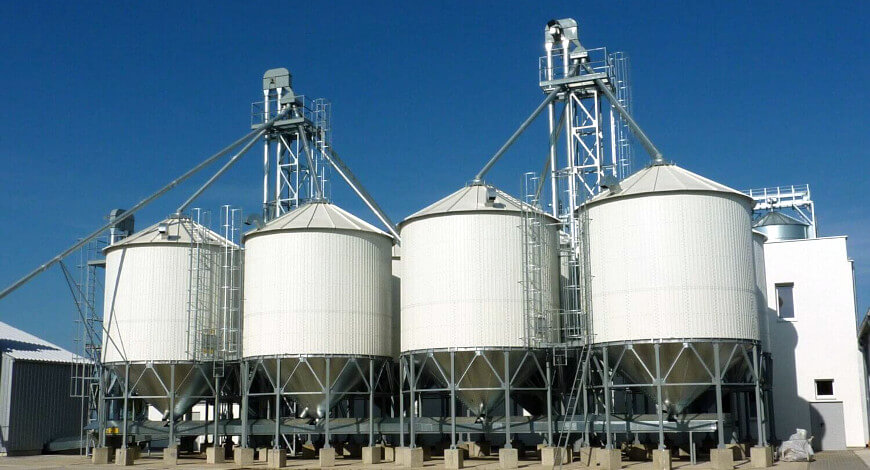
Feed storage - what do you need to know?
The correct storage and preparation of animal feed is of paramount importance and has a direct bearing on its nutritional value. It is worthwhile familiarising yourself with the most important rules for feed storage.
In the article:
- Types of animal feed
- Feed records on the farm
- Key issues concerning feed storage
- Legal requirements and key regulations for feed storage
- Improving feed quality
Types of animal feed
When talking about the storage of animal feed, it is worth highlighting what types of feed there are. The division of feed can be made taking into account several issues.
Place of origin of feed
- Industrial feeds - are manufactured by professional companies that are involved in the industry
- Farm feeds - are produced by the farmer himself, e.g. green fodder, silage, hay, straw, fodder cereals, etc.
Concentration of energy
- Concentrated feed - industrial mixtures, e.g. grains, animal meals, are characterised by the fact that 1 kg has an energy value that exceeds 0.7 units,
- Dry roughage - livestock feeds such as hay, straw, etc. 1 kg has an energy value of less than 0.7,
- Juicy roughage - are also economic feeds such as silage, pasture grasses, root crops and legumes, for example.
It is sometimes possible to find a division of feeds according to protein, vitamin or carbohydrate content. More specialised products include dietetic feeds, milk feeds, fattening feeds, etc.
ZUPTOR feed silos
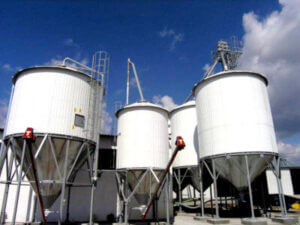
Silos for storing all types of feed with a conical hopper.
ZUPTOR feed silos stand for robust construction and high weather resistance. We have been offering proven solutions for over 25 years.
We invite you to learn more about the product: Feed silos
Feed records on the farm
Every livestock farmer should keep specific records of the feed stored on the farm. According to generally accepted principles, feed records should include information such as:
- name of feed
- origin of the product
- quantity
- destination
- the species and age group of the animals that will receive the feed
- date of purchase of feed
- additional comments
Regular record-keeping is a very important issue. Every farmer should remember to enter information in a table for each new feed that arrives on the farm.
Legal requirements and key regulations for feed storage
A very important issue concerning feed storage is compliance with the standards of the Regulation of the European Parliament and of the Council of 12 January 2005 concerning feed hygiene requirements.
Under current law, it is important to remember that:
- the responsibility for feed safety lies with producers
- safety in feed production should be ensured throughout production
- imported feeds should achieve quality standards at least equal to those of local feeds
- HACCP principles should be followed in the production of primary feed in order to maintain the highest level of feed hygiene
- Feed safety depends on a great many factors, the regulations only set minimum requirements
It is worth reading the entire document and learning about its key points.
Key issues concerning feed storage
Any fodder collected on the farm must be stored properly. They are most often stored in a special feed store. The more animals on the farm, the greater the need for appropriate storage facilities.
It is important to observe all the rules, to ensure that the technical parameters of the individual equipment are correct. This will keep the feed in good condition for a longer period and provide the animals with the nutrients they need.
Mixed feed can also be stored in silos, which have their place outside the feed store or inside. The storage areas should provide adequate humidity, as well as temperature and effective protection from light. These areas should also be well ventilated.
Improving feed quality
Using various methods, the quality of the forage can be effectively improved. One solution is wetting. This treatment counteracts the dusting of bulk feed, which increases the safety of the animals as well as that of the operators. Another method is conditioning, which is the treatment of the mixture before pelleting and extrusion.
The quality of the feed is also enhanced by pelletisation - it makes it easier to apply the feed to the animals.
When talking about improving the quality of forage, one should also not forget micronisation, i.e. infrared irradiation to accelerate the pressure and temperature rise, which allows greater digestibility.
In order to improve quality, the feed can also be tonified with pressurised steam. This process allows many harmful compounds to be destroyed.
Other methods include extrusion, which involves extruding a bulk material under higher pressure and also at a higher temperature. A very similar procedure is expounding. This is a very rapid increase in the volume of individual particles.


